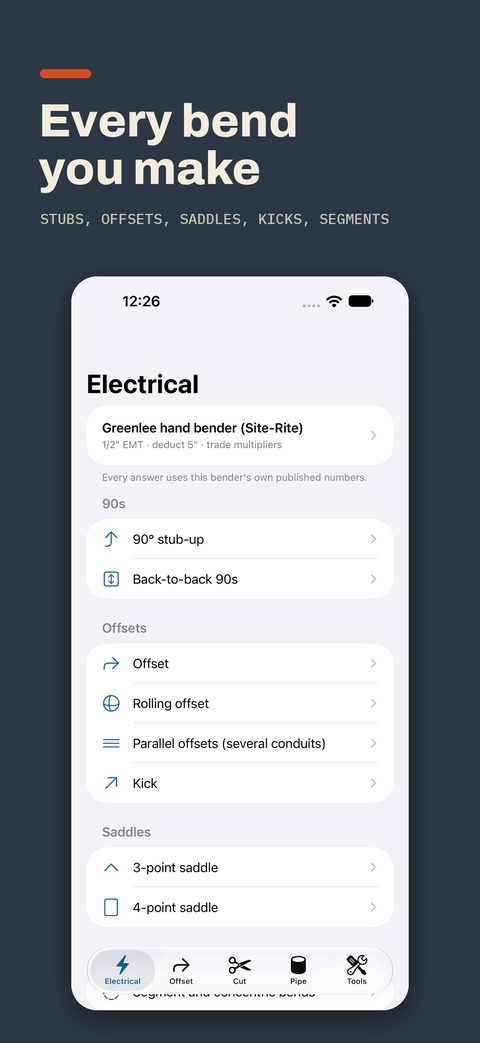
Every bend you make
90° stubs, back-to-back 90s, offsets, rolling and parallel offsets, kicks, 3- and 4-point saddles, segment and concentric bends.
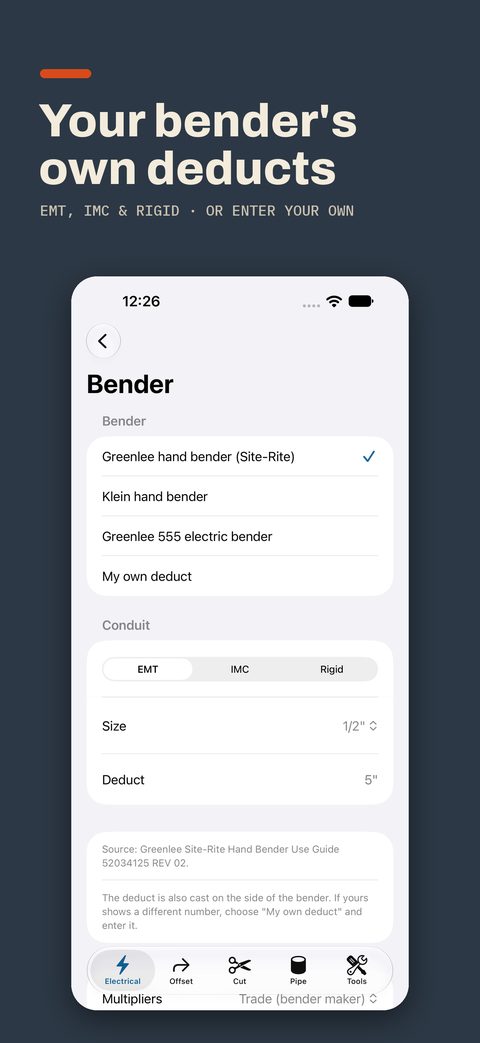
Your bender's own numbers
EMT, IMC and rigid with the Greenlee, Klein and Gardner Bender hand bender deducts, the Greenlee 555, Greenlee 1800, Current Tools 77 and 753, and Greenlee 881, 882 and 884/885 hydraulic benders (stubs, with each manual's own steps). Or name your own bender and add its radius. Pin the ones you use and switch from any bend screen.
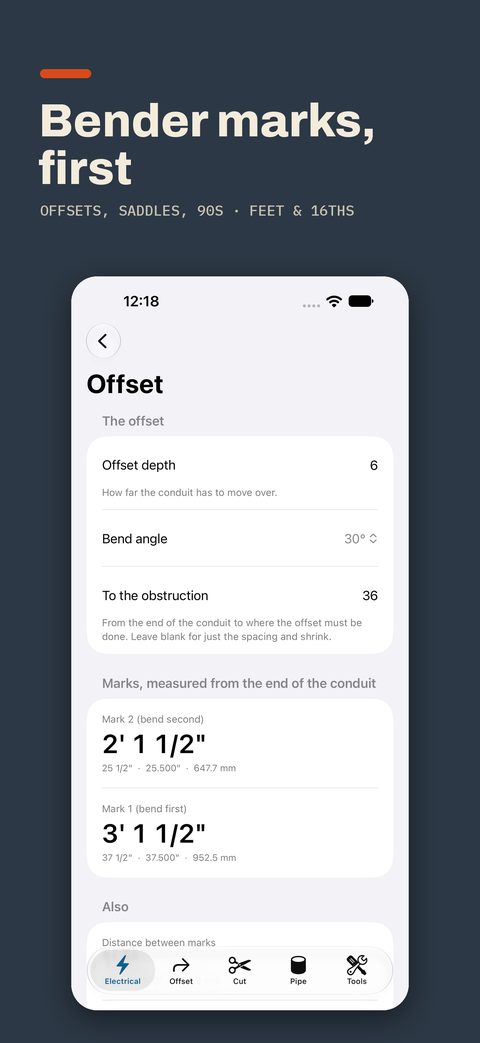
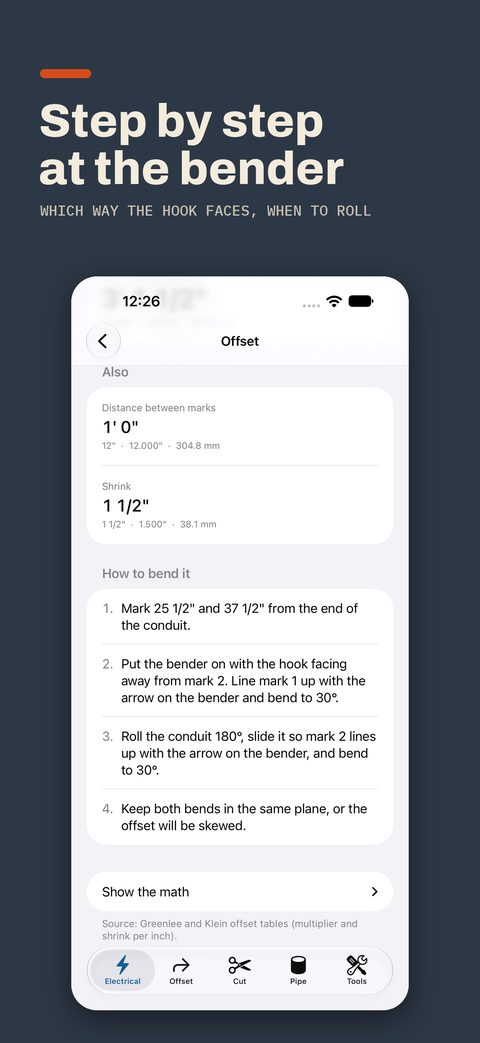
Marks first, then how to bend
The marks measured from the end of the conduit, then which mark to bend first, which way the hook faces and when to roll it. Field View puts the marks full screen in big type and keeps the screen awake.
Bend protractor (free)
Lay the phone on the conduit and it works as a level that reads the bend angle live. Zero it on the first leg and pick a target from 10° to 90°, or open it from a bend and it's already set to that bend's angle. The screen turns green and taps when you hit it, and can beep too. There's a flashlight button for dark spots. It also reads overbent 90s for springback. Phone sensors aren't certified instruments, so check critical bends with a torpedo level.
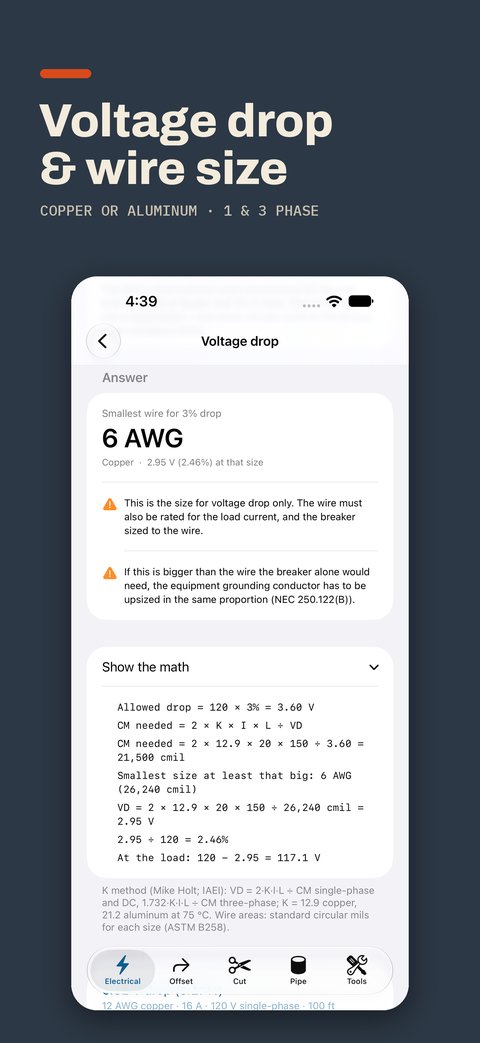
Voltage drop and wire size
The drop on a run, the smallest wire for 3%, or how far a wire can go. Copper or aluminum, single-phase, three-phase or DC, parallel sets. Never smaller than code allows.
Amps, Ohm's law, transformers
Amps from watts, kW, kVA or horsepower with power factor and efficiency, Ohm's law from any two values, and transformer full-load current.
History that stays
Every answer is kept until you delete it, and tapping one puts its numbers back. Your last inputs are remembered.
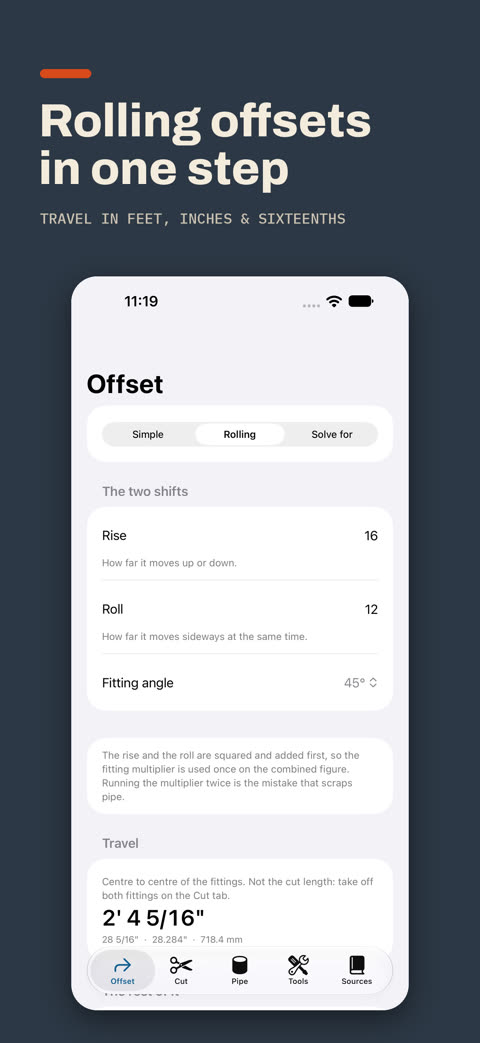
Pipe offsets, all three kinds
Simple, rolling and odd-angle. On a rolling offset the rise and roll are combined first, so the multiplier is applied once, not twice.
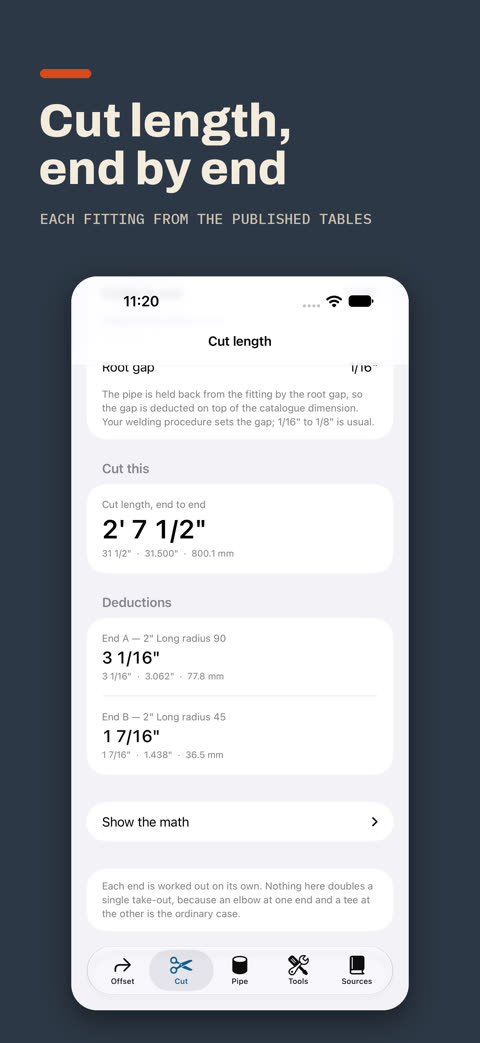
Cut length, end by end
Pick the size, the joint and the fitting on each end. It takes off the right amount for each, and won't give a cut until both ends are set.
Take-outs from the tables
Butt weld, socket weld, threaded, copper, PVC, press fit and grooved, from the published standards and catalogues, with the source named.
Saddles, miters and more
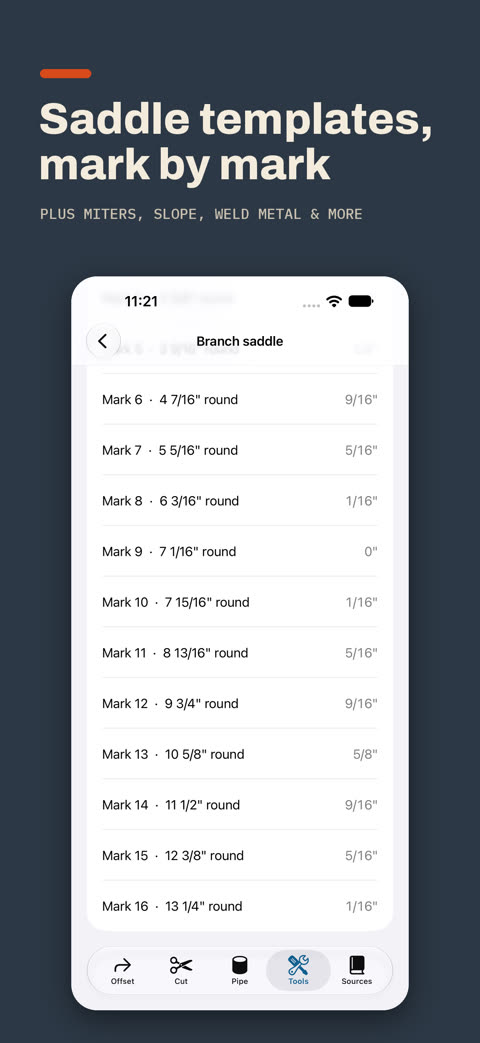
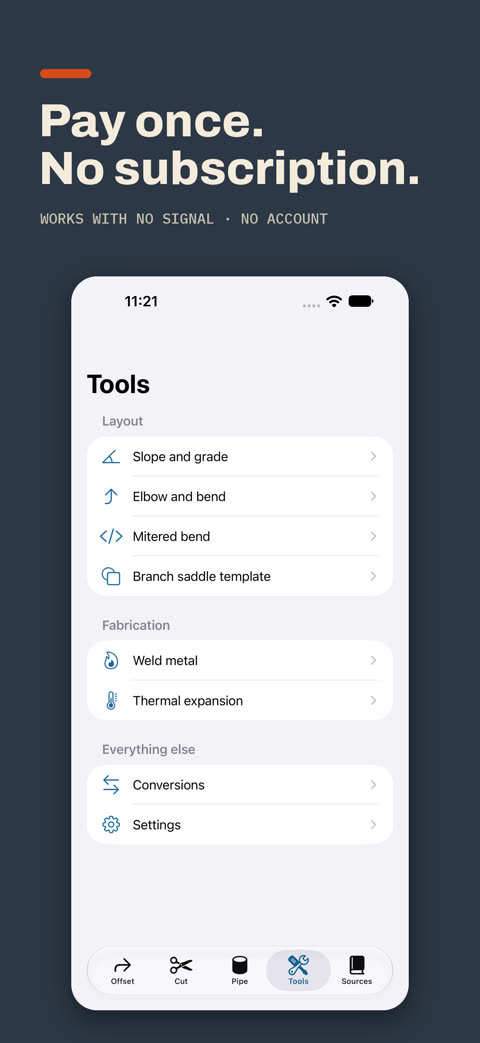
Branch saddle templates, mitered bends, slope and grade, weld metal, thermal expansion, pipe sizes and conversions.
Type it how you'd say it
18 3/8, 4' 6 1/2", 4 ft 6 in or millimetres. If it can't be sure what you meant, it asks instead of guessing.
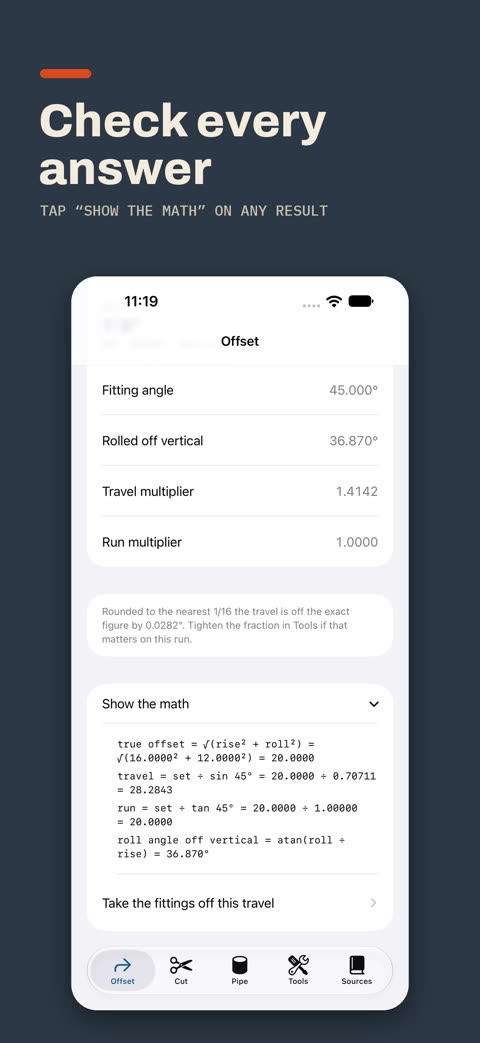
Shows the math
Every answer opens up to the worked numbers, so you can check it against your own scratch pad.
The everyday tools are free for good: 90° stubs, back-to-back 90s, conduit offsets, bender tables, voltage drop, amps, Ohm's law, the bend protractor, the level, tape math, bender specs, the offset angle check, conduit sizes and weights, trig and gain, parallel resistance, BTU and kWh, simple pipe offsets, slope and conversions.
CutRight Pro adds kicked and compound 90s, matching an existing offset, whole-stick layout, knockout spacing, conduit fill, rolling and parallel offsets, kicks, 3- and 4-point saddles, segment bends, power factor correction, printable wrap templates, wire size and max run, transformer current, cut lengths with take-outs, rolling pipe offsets, miters, saddle templates, weld metal and thermal expansion. Try Pro free for 24 hours (the clock starts when you tap Start), then unlock it with a one-time purchase of $12.99. No subscription, no account, no ads, and it collects no data.